Online Business Ideas: 10 Real Options You Can Start Small
Okay so if you've got a laptop, a skill, and approximately one free hour, you have more than enough to start.

The best online business ideas for beginners sell a skill you already have as a service, a digital product or content, because they cost little to start. People really do buy online: e-commerce was 17.1 percent of U.S. retail sales in the second quarter of 2026, per the Census Bureau.
What's in this guide
- What is the best online business to start with no money?
- What are the best online business ideas for beginners?
- How much money do you need to start an online business?
- How can AI help you run a small online business?
- Do you have to pay taxes on an online business?
- How do you avoid online business scams?
- The honest truth about starting small
People really are buying online. The U.S. Census Bureau reported that e-commerce sales in the second quarter of 2026 hit $340.2 billion, accounting for 17.1 percent of total U.S. retail sales (Census Bureau). And it's not just big brands cashing in. In October 2026 alone, 501,609 business applications were filed across the country (Census Bureau).
So what actually works when you're starting from scratch? The best online business ideas sell a skill you already have, as a service, a digital product, or content, because they cost little to nothing to get off the ground. I keep a running list in my notes app during nap time. Here's what's actually worth your attention.
What is the best online business to start with no money?
Service businesses are the easiest starting point when you have more skill than startup cash. If you can write, edit, manage social media, or organize someone else's calendar, you can start selling that skill this week. You don't need a storefront, inventory, or a big budget. You need a laptop and a way to communicate.
Platforms like Upwork let you find clients without building an audience first. The fee they take ranges from 0% to 15% per contract (Upwork).
What are the best online business ideas for beginners?
These ten online business ideas for beginners are low-cost, realistic, and something you can actually start this month.
- Freelance writing or editing. You write things, brands pay you for them. AI can draft outlines or first passes, but your voice and judgment are what clients are actually hiring.
- Social media management for local businesses. Small businesses often need someone to post consistently and respond to comments. AI helps with caption drafts and content calendars, so you can manage more clients without losing your mind.
- Virtual assistant work. Email management, scheduling, research, data entry. A lot of this is repetitive, which means AI can help you move faster. You're the one who keeps things from falling through the cracks.
- Ebooks on Amazon KDP. You write it once and list it. Amazon KDP offers a 35% royalty option and a 70% royalty option depending on price and distribution settings (Amazon KDP). If you use AI to help write or translate it, KDP requires you to disclose that when you publish (Amazon KDP). KDP says you're not required to disclose AI-assisted content (Amazon KDP).
- Printables and templates. Budget trackers, meal planners, resume templates, social media kits. You make them once, list them, and people download them. AI can help you brainstorm formats and write product descriptions.
- A YouTube channel. Ad revenue through the YouTube Partner Program requires 1,000 subscribers plus either 4,000 qualified watch hours in the last 12 months, or 10 million qualified Shorts views in the last 90 days (YouTube). That takes time. AI helps with scripting and titles so you can focus on actually filming.
- Affiliate content. You recommend products, include a link, and earn a commission if someone buys. The FTC is clear: if you got anything of value to mention a product, or if you have any financial relationship with a brand, you have to disclose it. Simple language like "ad" or "sponsored" works (FTC). See the full breakdown at how to start affiliate marketing.
- UGC videos for brands. UGC stands for user-generated content. Brands pay creators to make authentic-looking videos they can use in their own ads. AI helps with scripting and hooks. Learn more at how to become a UGC creator.
- Online tutoring or teaching a skill you know. Math help, language practice, Canva tutorials, music lessons over video call. You already know the thing. AI can help you build lesson outlines and practice materials.
- A niche newsletter. Pick a topic you genuinely know and care about, write weekly, and grow a list. AI drafts, you edit and add your actual opinions. Monetization options include sponsorships, affiliate links, or paid tiers, all of which take time to build.
How much money do you need to start an online business?
Honestly, it depends on what you're starting, and service businesses often cost close to nothing if you already own a laptop. The SBA recommends calculating your startup costs before you launch so you understand your expenses and can estimate when you'll break even (SBA).
Here's the honest part: some businesses take years before turning a profit. The SBA says exactly that (SBA). A lean business plan can take as little as one hour to put together and is often just one page (SBA). Start there before spending anything.
Want the good stuff early?
Join the early bird list for my AI video editing course. First access, lowest price ever, plus social media tips by email. Unsubscribe anytime.
Free. Unsubscribe whenever you want. Privacy
How can AI help you run a small online business?
AI is genuinely useful for the repetitive, time-consuming parts of running a small business, which means more time for the stuff only you can do. According to Pew Research Center, 28% of employed adults now use ChatGPT for work, up 20 percentage points in two years (Pew Research Center). It's not a niche thing anymore.
Where it actually helps: drafting captions, writing product descriptions, outlining blog posts, answering customer emails, planning content calendars, and brainstorming ideas when your brain is running on three hours of sleep and cold coffee. I let AI write the first draft of almost everything. Then I read it, fix what sounds weird, and add the parts that actually sound like me.
Always edit what AI gives you. It doesn't know your audience the way you do, and it will occasionally say something confidently wrong. You're the human in the loop. That part matters. For a deeper look at getting started, how to make money with AI with no experience walks through it practically.
Do you have to pay taxes on an online business?
Yes, and this applies even if it's just a side thing you do after the kids go to bed. The IRS says you must report income earned from the gig economy on a tax return, even if it's from part-time, temporary, or side work (IRS). If your net earnings from self-employment hit $400 or more, you're required to file and pay self-employment tax (IRS). The self-employment tax rate is 15.3% (IRS).
This isn't tax advice, and I'm very much not a CPA. Talk to a tax professional before you file, especially your first year. It's worth it.
How do you avoid online business scams?
If someone is promising you big money with little or no experience required, that's a red flag the FTC specifically calls out. The FTC warns that business opportunity promoters often make exactly that claim (FTC). And if a coach or promoter asks you to pay more money to help your business succeed after you've already paid, stop (FTC).
Before you pay anyone for a business opportunity or coaching program, the FTC says to ask these questions (FTC):
- What would I actually be selling or doing?
- How would the business generate income?
- What would my specific expenses be?
- Can I afford it?
- When would I expect to turn a profit?
Scammers want your payment info first. The FTC is clear on this: they want your credit card or bank account information before you ask questions (FTC). If something feels off, trust that feeling and look it up before you pay.
The honest truth about starting small
Most of these ideas take real time before they pay off, and that's completely normal. The ones that work best tend to be built slowly, in the margins of real life, around a skill you already have. I do mine during nap time, after bedtime, and occasionally on the couch while pretending to watch TV.
Pick one idea that fits your actual life right now. Write the one-page plan. See what it would cost you in time before it costs you in money. That's a more useful starting point than anything else.
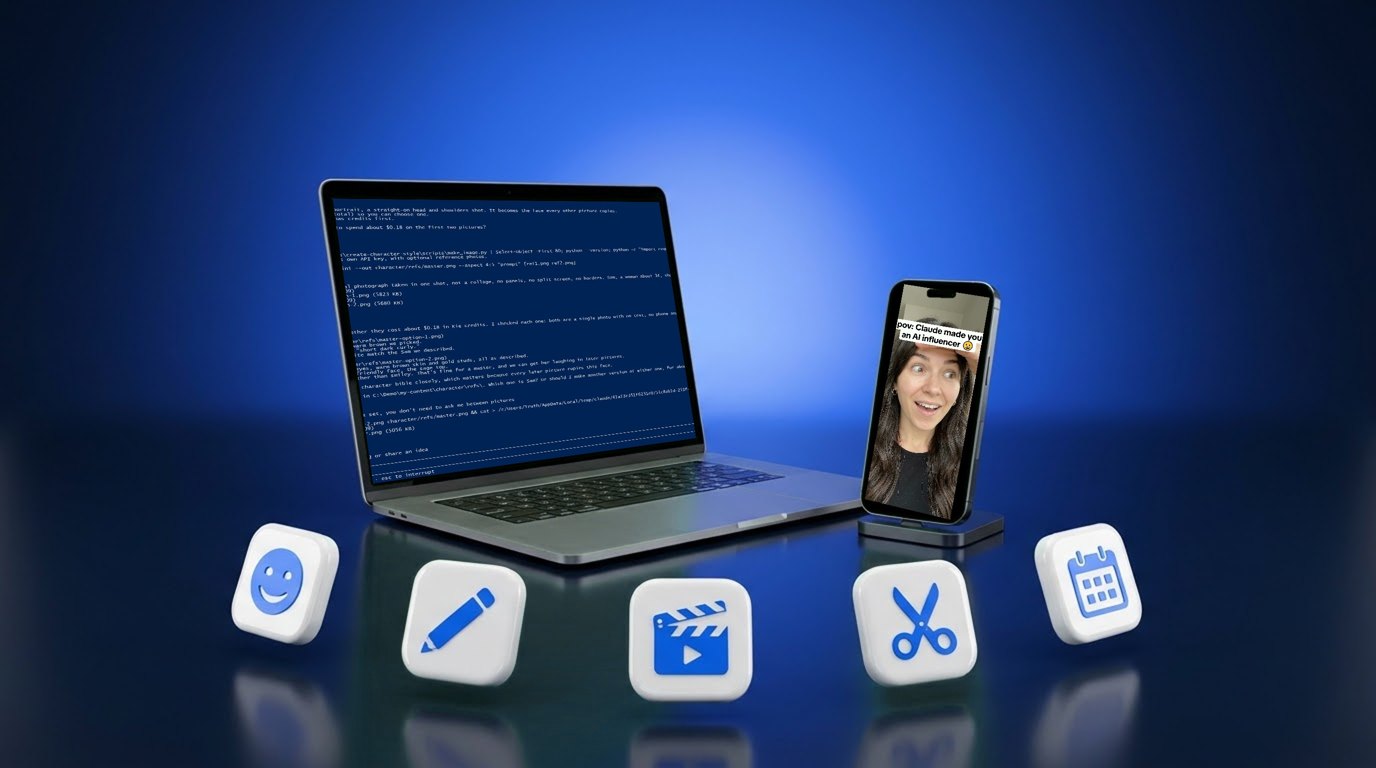
Want an AI creator of your own?
It's the step-by-step kit I'm built with. Claude Code builds your character and your look, writes your reels, makes the clips, edits them, and plans your posts. You don't have to be on camera.
See how it works →